Our mentors - Clemens Brandstetter
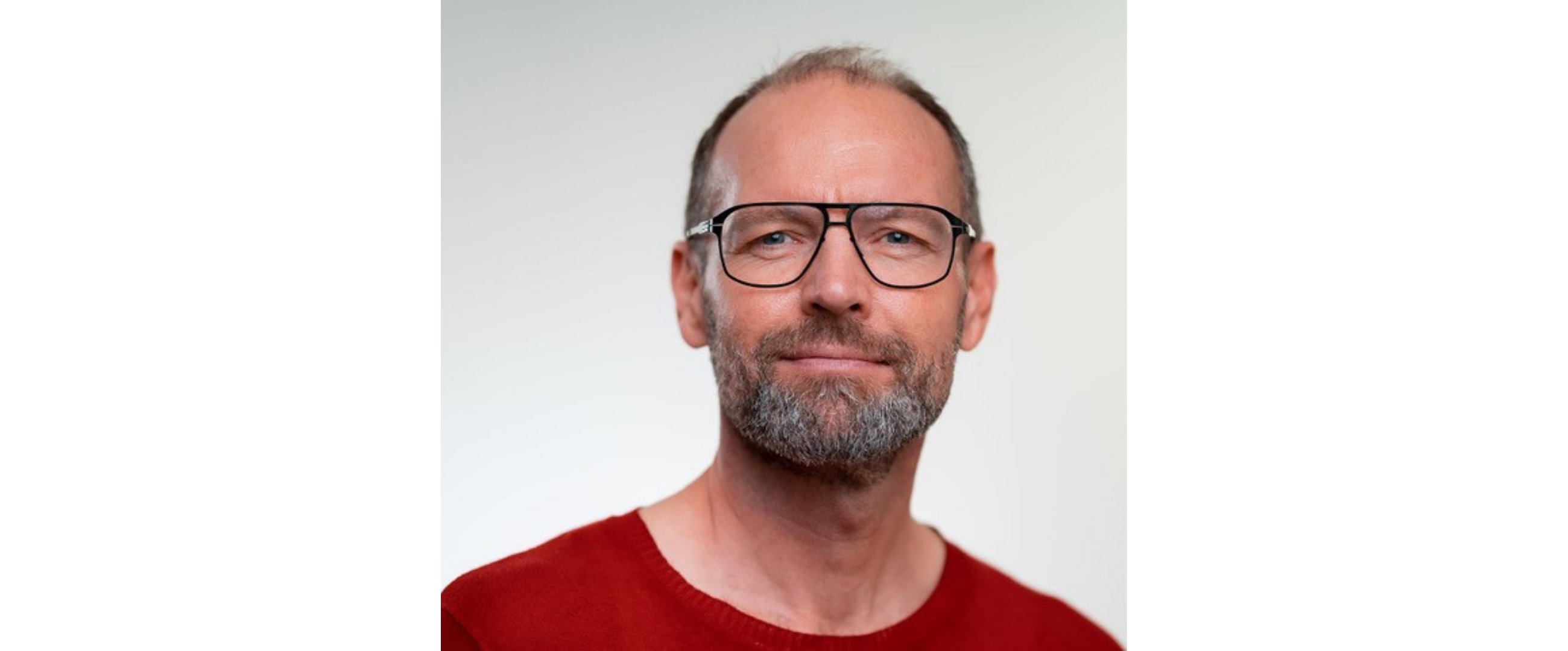
What do you do? Can you briefly introduce yourself?
For the past 25 years, I’ve worked in various management positions at large corporations in business and corporate development, specifically in strategy and IT.
In 2013, I left the corporate world to join macc Management- und Unternehmensberatung as managing partner. Since then, I’ve been bringing my corporate expertise into consulting, training, and coaching on core topics such as sales & service excellence, change & culture management, corporate innovation, and agility.

How did you become part of Impact Factory?
For one thing, I’ve had a personal friendship with Anthropia co-founder Dirk Sander for almost 15 years. Long before Impact Factory existed, we thought about how to advance values-based leadership and social responsibility in companies. And since we’d been in a similar position ourselves: part of our “mission” is to firmly anchor these convictions at as many management levels as possible, to drive the transformation of business toward a more sustainable economy that serves life even more.
Through this close connection, I’ve been part of Impact Factory from the very beginning – from the concept all the way to running various workshops.
What are your convictions? What motivates you?
While I worked a lot on restructurings and the like during my time at large corporations, in my early thirties I also realized that this wasn’t really “me” – or at least that something was missing. Around 2007, I finally discovered social business for myself and, shortly after, pushed it forward internally on a voluntary basis during my time at Telekom, in the form of social intrapreneurship. The next step in this journey was the project managerfragen.org: a dialogue between society and leading figures from business. Against the backdrop of the global economic crisis in early 2009, it was initially mainly about regaining trust and about talking with each other instead of about each other. That’s the only way we can consistently work on society’s challenges.
And why social business? What appeals to you about the idea?
You could say I was shaped in this direction early on. My parents engaged with sustainability topics early, both privately and professionally – long before these topics got the attention they deserved; on the contrary, they were more likely to be smiled at or even avoided. During my economics studies some 30 years ago, I was already dealing with the early forerunners of such topics. Then, as I mentioned, I went into traditional business first, but always with these thoughts about alternatives, change, innovation, and bringing economy and ecology together in the back of my mind.
In the past, a lot of social responsibility happened at the charity level. The decisive step, however, is not just to “do charity and donations” but to turn entrepreneurial skills into concrete solutions and tackle social and environmental problems in a scalable way. That’s how I understand “giving back” – the responsibility of leaders and of modern entrepreneurship.
To change systems in the long term, you also need pressure from outside as well as from inside (intrapreneurs, “organizational rebels”). From outside, movements like Fridays for Future – and most recently the state – provide that pressure; I myself want to help from the inside to get business and management to rethink. At this point, it’s not possible to simply “think companies out” of solutions or stigmatize them negatively. What’s needed instead are the right governance systems (rules of the game) to consistently change things for the better and shape decision-makers’ mindsets accordingly.
Okay, now to your work at Impact Factory. What role(s) do you take on exactly?
For one, I was involved in designing and building Impact Factory – first in developing the program, later, for example, in taking it virtual after COVID hit. I also design the Intro Bootcamp format at the start of each batch, which consists of two sessions. When Impact Factory launched, I ran a lot more sessions, but as the mentor network grew, I was gradually able to hand these over to other experts.
One step before that, I’m part of – or rather a juror at – the “assessment center”, where we talk with applicants to assess their ideas and founder personalities and ultimately make a selection.
What skills do you want to pass on to participants?
More specifically, I see my expertise especially in the early startup phase. That means I provide holistic support from the ideation process all the way to go-to-market. For business modeling and for designing the operating model, I can draw on proven experience from my previous corporate work and my current consulting.
At the same time – regardless of the development stage – I can offer an extensive network.
Do you have a favorite startup industry? Which ideas or people particularly impress you?
Yes, I believe, hope, and am convinced that technology as an enabler can make a big contribution to solving problems. Of course, we’ll always encounter new challenges along the way, especially ethical ones – for example, when we talk about AI or robotics. But from my perspective, looking at the world’s population, prosperity for all can only be achieved with accompanying leaps in technology. I don’t think there will be a step backward, so instead we have to make sure that this path can guarantee supply, prosperity for all, and a dignified life.
Beyond that, I’d like to see women – especially women in technical industries – move further into the spotlight to develop solutions and change the world.
Why should startups come to Impact Factory?
I think Impact Factory has managed to build a unique community of now 90-100 startups. Above all, it’s very diverse, spanning a wide range of industries, development stages, and business models. In this setting, all members can learn a great deal from each other and adapt what works. The common reference point for the teams isn’t an industry but the broad spectrum of the 17 SDGs.
Second – and building on that – I’m impressed by the people not only in the substance of their ideas but also in their attitudes and values. I can clearly see that, unlike in other contexts, there’s much more togetherness and cooperation than rivalry or competition. Our collaboration is marked by openness, mutual interest, and genuine human closeness. We convey this spirit early on in the program.
And last but not least, we’ve built an excellent program based on proven, current models from the startup industry. At the start, we looked at various best-practice elements and tried to bring them all together in our incubator. Our success – that is, the feedback from the startups and the ecosystem – confirms our approach.
In the end, this creates not just a professional but also an inspired and “engaging” working atmosphere that’s simply fun.
Finally: What advice would you give to anyone who’s still undecided?
Basically, being (or becoming) an entrepreneur of course starts with courage and believing in your own idea. At the same time, it’s especially important for startups to bring openness and the ability to change. It will almost always be the case that your first idea changes and evolves on the way to founding, possibly in directions you didn’t expect at the start. And having the right network of supporters is extremely important – people who back you not only on the content side but also emotionally and catch you when you fall.
Thank you so much, Clemens! See you again at the assessment center!


Visit us
You'll find us at Villa Anthropia on the Haniel Campus in Duisburg-Ruhrort.